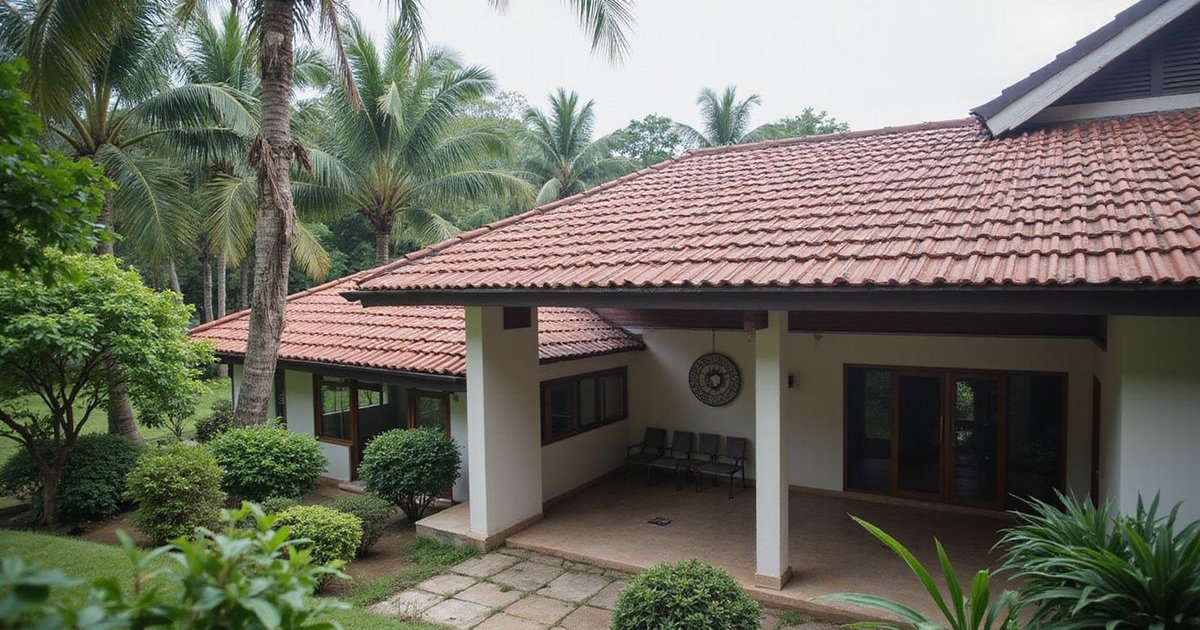
Malaysia’s tropical climate throws a lot at our homes. The combination of intense afternoon sun, sudden heavy downpours, and high humidity creates a perfect storm for roof damage. We established Roofing Man in 2013, and since then, our team has seen exactly how these weather cycles punish roofs across the Klang Valley.
You might think a leak is just bad luck.
Experience tells us it is usually a sign of a specific, preventable structural failure. Understanding these root causes saves you money and protects your ceiling from collapsing.
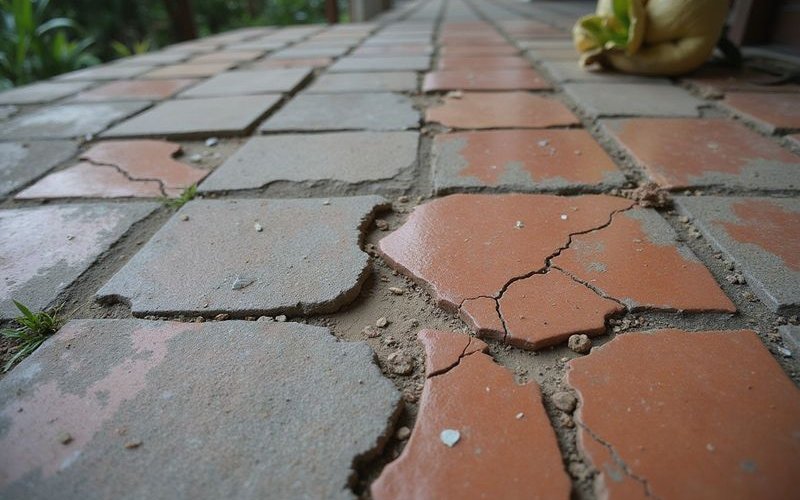
1. Cracked or Broken Tiles
Tiles are your primary shield against the elements. While they are durable, they take a severe beating from the local weather patterns in Petaling Jaya and KL.
Why it happens:
- Thermal Shock: Your roof surface can reach 60°C+ at noon and drop rapidly when a 3 PM thunderstorm hits. This rapid expansion and contraction causes hairline cracks.
- Foot Traffic Damage: Contractors installing air conditioning compressors, solar panels, or internet dishes often step on the “water course” (the weak center) of the tile instead of the reinforced edge.
- Debris Impact: Falling branches from older trees in established neighborhoods like Bangsar or SS2 frequently shatter clay and concrete tiles.
Prevention:
- Schedule visual inspections from the ground level or a ladder every six months.
- Require any worker going onto your roof to walk only on the reinforced overlaps.
- Replace cracked tiles immediately rather than trying to patch them with silicone.
2. Deteriorated Flashing (The Zinc/Metal Joints)
Flashing refers to the metal strips used to seal joints where the roof meets a wall, chimney, or another roof section. In Malaysia, this is the most common failure point for terrace houses with renovations or extensions.
Why it happens:
- Material Corrosion: Many older contractors used cheap zinc flashing that rusts through within 5 to 7 years.
- Sealant Failure: The silicone used to bond the flashing to the wall degrades under UV exposure, peeling away and leaving a gap.
- Structural Movement: As your house settles, the gap between the wall and roof can shift, tearing the flashing loose.
Prevention:
- Check the metal strips along your party walls for rust spots.
- Apply a fresh layer of UV-resistant PU (Polyurethane) sealant if you see peeling.
- Upgrade to aluminium or lead-free flashing materials for longer durability.
3. Clogged Box Gutters and Valleys
Water cannot flow uphill. When your drainage path is blocked, the water pools and eventually seeps backward under the roof tiles or through the ceiling.
Why it happens:
- The “Concealed Gutter” Trap: Many Malaysian homes feature concealed concrete gutters (box gutters) that are hard to see and harder to clean.
- Vegetation Growth: Bird droppings often contain seeds that sprout into small trees within the gutter, cracking the concrete.
- Debris Accumulation: Leaves accumulate quickly during the dry season and form a dam when the first rains arrive.
Prevention:
- Clean gutters thoroughly every three months.
- Install gutter guards if you have mango or rain trees nearby.
- Test the flow with a garden hose to ensure the water moves swiftly toward the downspout.
Quick Comparison: Waterproofing Materials
Choosing the right material for your repair matters. Here is how common options compare for local homes.
| Material | Best Use Case | Approx. Lifespan |
|---|---|---|
| Acrylic Coating | Minor hairline cracks on concrete | 2-4 Years |
| Bitumen Torch-on | RC Flat roofs (Porches/Balconies) | 10-12 Years |
| Cementitious | Bathrooms and internal wet areas | 15+ Years |
| PU Injection | Sealing active leaks in concrete slabs | Permanent (for that crack) |
4. Aging Roof Materials
Nothing lasts forever. Materials degrade naturally, and the harsh UV index in Malaysia accelerates this process significantly compared to cooler climates.
Why it happens:
- Concrete Tile Wear: After 25 years, the protective coating on concrete tiles wears off, making them porous and water-absorbent.
- Metal Roof Rust: Metal deck roofs (zinc/awning) often develop rust around the screw holes first.
- Membrane Failure: Waterproofing layers on concrete porches typically expire after 10 years, leading to “slab leaks.”
Prevention:
- Apply a specialized roof coating to extend the life of aging concrete tiles.
- Replace rusted screws on metal roofs with larger, rubber-washer capped screws.
- Budget for a full re-roofing if your home is over 30 years old and still has the original materials.
5. The RC Flat Roof Failure
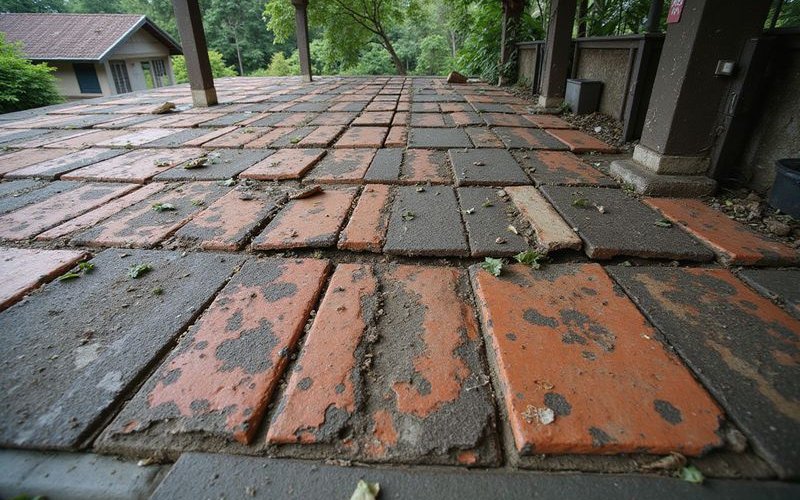
This is a specific issue prevalent in Malaysian terrace houses. Most homes have a Reinforced Concrete (RC) flat roof over the car porch or balcony.
Why it happens:
- Ponding Water: If the concrete slab was not poured with the correct gradient, water sits in puddles after rain.
- Crack Formation: Concrete moves and cracks over time, destroying the waterproofing membrane underneath.
- Drainage Pipe Leakage: The interface where the PVC rain pipe meets the concrete slab is a frequent leak point.
Prevention:
- Ensure the slab has a slight slope to direct water to the drain immediately.
- Re-waterproof the slab using a torch-on membrane or heavy-duty liquid applied membrane.
- Keep the drain outlet completely clear of dirt to prevent standing water.
Bonus: Monsoon Season Stress
The Northeast Monsoon typically hits from November to March. This period brings sustained rainfall that tests every weak point in your system.
Pre-monsoon preparation:
- Secure Loose Tiles: High winds can lift tiles, so check that they are properly clipped or seated.
- Clear the Drains: A blocked drain during a 60mm/hour downpour causes overflow in minutes.
- Trim Overhanging Branches: Prevents physical damage from falling limbs during storms.
When to Be Concerned
You need to act fast if you spot specific warning signs. Waiting often leads to expensive ceiling and electrical repairs.
Watch for these indicators:
- Yellow or brown rings forming on your plaster ceiling.
- Peeling paint or “bubbling” on the upper walls.
- Musty smells in bedrooms directly under the roof.
- Water dripping from light fixtures (this is an electrical fire hazard).
Prevention Is Cheaper Than Repair
Regular maintenance saves you thousands of Ringgit in the long run.
Our recommended maintenance schedule:
- Annual Professional Inspection: Have an expert check the ridges and flashing.
- Bi-Annual Gutter Cleaning: Once before the year-end monsoon, and once mid-year.
- Immediate Action: Fix small leaks the moment they appear.
Need an Inspection?
Uncertainty about your roof’s condition is stressful. We are here to help you identify issues accurately and provide honest advice on the best course of action for your roof leak repair. Contact us today for a thorough assessment of your home.