
You know how the weather here in the Klang Valley can shift from blistering heat to a violent thunderstorm in less than twenty minutes? We see the toll this thermal shock takes on local homes every single day. Roofing materials expand and contract rapidly under these conditions, leading to cracks that might look small but cause massive headaches.
Our team established Roofing Man back in 2013 to help neighbors deal with exactly these kinds of tropical weathering issues. Since then, the question we hear most often isn’t about tiles or metal decks. It is simply: “Can I just patch this myself?”
Making the wrong choice here usually impacts your wallet more than your weekend schedule. A simple DIY fix on a terrace house in Petaling Jaya might save you a few hundred Ringgit, but missing a structural issue could cost thousands later.
Let’s look at the data, the real safety risks involved, and how to decide which route is right for your home.
When DIY Makes Sense
Gutter Cleaning
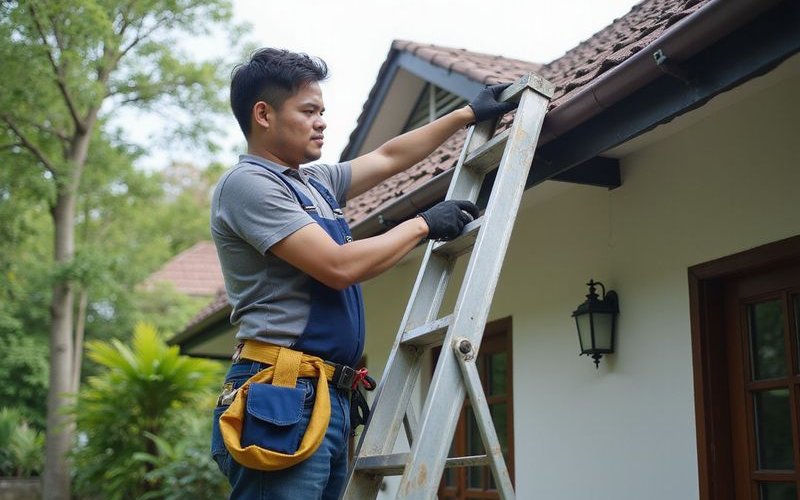
Clearing debris from gutters is a task most homeowners can handle safely with a ladder and some basic precautions. Regular cleaning is critical here in Malaysia to prevent Aedes mosquito breeding sites. Stagnant water in a clogged gutter is a primary cause of Dengue outbreaks in residential neighborhoods.
DIY tips:
- Use a stable ladder with someone spotting you.
- Wear heavy-duty gloves to protect against sharp dried palm leaves or rusty edges.
- Flush with a hose to ensure water flows toward the downspout and isn’t pooling.
Minor Sealant Touch-ups
If you can safely access a small area where sealant has cracked or lifted, applying new sealant is straightforward. We often see this around flashing on lower awnings where the risk of falling is minimal.
DIY tips:
- Purchase a high-grade, UV-resistant sealant suited for the Malaysian climate (brands like Selleys or Pentens are common hardware store finds).
- Clean the area thoroughly with a wire brush to remove moss or old silicone.
- Apply only when the surface is completely dry and not scorching hot to ensure proper adhesion.
Clearing Debris
Removing fallen branches, leaves, or other debris from your roof helps prevent damage and blockages. The inter-monsoon periods often bring strong winds that deposit heavy debris on valley gutters.
When to Call a Professional
You Can’t Find the Leak
Water can travel along surfaces before dripping, making the actual entry point hard to locate. We frequently find that a watermark on your bedroom ceiling in Subang is actually caused by a cracked tile three meters away near the ridge. Professionals use moisture meters and thermal imaging to track these specific paths without guessing.
Structural Damage Is Suspected
If you notice sagging, rotted timber, or other structural issues, professional assessment is essential. These problems require expertise to fix correctly.
Common signs of structural failure in Malaysia include:
- Termite Infestation: “White ants” attacking the timber trusses is a widespread issue in older landed properties.
- Waterlogging: Insulation that has become heavy and soggy, putting weight on the ceiling plaster.
- Sagging Ridge Lines: A visible dip in the center of the roof line indicating truss failure.
The Roof Is Steep or High
Safety must come first. Steep or multi-story roofs require proper equipment and training to access safely. Many terrace houses in KL feature steep clay tile designs that become incredibly slippery with even a hint of moss or humidity.
Multiple Problem Areas
When issues are widespread, a professional can assess the overall condition and provide a comprehensive solution. Patching one leak while ignoring five others is a temporary bandage that costs more in the long run.
Waterproofing Is Needed
Professional waterproofing requires specific materials and techniques. Improper application often fails, wasting money and leaving problems unfixed. This is particularly true for the reinforced concrete (RC) flat roofs found on car porches and kitchen extensions, which are prone to hairline cracks.
Warranty Considerations
DIY repairs may void manufacturer warranties or insurance coverage. Professional work typically comes with its own warranty.
The Cost Comparison: DIY vs. Professional
Understanding the financial breakdown helps clarify the decision. We have compiled a comparison based on average 2024-2025 market rates in the Klang Valley for standard terrace homes.
| Feature | DIY Approach | Professional Approach |
|---|---|---|
| Est. Cost (Minor) | RM 150 - RM 300 (Materials + Tools) | RM 400 - RM 800 (Labor + Materials) |
| Est. Cost (Major) | RM 1,000+ (Risk of wrong materials) | RM 2,500 - RM 15,000+ (Full scope) |
| Time Investment | 4-8 Hours (Plus shopping time) | 0 Hours (Turnkey service) |
| Warranty | None (Personal liability) | 1-5 Years (Depending on contractor) |
| Safety Risk | High (Falls are a leading cause of home injury) | Low (OSH-compliant safety protocols) |
The Hidden Costs of DIY Gone Wrong
What seems like a money-saving DIY fix can become expensive if the repair fails. We have repaired countless roofs where a well-meaning homeowner used the wrong type of silicone on metal decking.
Potential financial setbacks include:
- The “Redo” Cost: Paying a pro to strip away the failed DIY attempt before fixing the original issue often doubles the labor cost.
- Medical Expenses: Private hospital fees for fall-related injuries in KL can easily exceed RM 10,000.
- Secondary Damage: A botched seal can trap water inside, rotting the fascia boards and destroying ceiling plaster.
- Tool Waste: Buying specialized tools like tin snips or rivet guns that you only use once.
Questions to Ask Yourself
Before attempting DIY roof work, run through this mental checklist:
- Can I safely access the area? If the pitch is steeper than 30 degrees or two stories up, stop immediately.
- Do I have the right tools? Roofing work needs specific equipment, not just a hammer and nails.
- Am I confident I’ve found the actual problem? Misdiagnosis leads to failed repairs and water damage spreading to electrical wiring.
- Will this void any warranties? Check your home insurance policy or the roof manufacturer’s terms.
- What’s the worst case if I get it wrong? If significant damage could result, call a pro.
The Professional Advantage
When you hire a reputable roofer, you are paying for more than just labor. You are securing the longevity of your property.
Key benefits include:
- Expertise: Years of experience diagnosing specific local issues like cracked ridge cement or rusted valley gutters.
- Safety: Proper scaffolding and safety harnesses that comply with DOSH (Department of Occupational Safety and Health) guidelines.
- Materials: Access to professional-grade industrial waterproofing compounds not sold in standard hardware shops.
- Warranty: Work backed by a written guarantee that protects your investment.
- Efficiency: Jobs completed faster and correctly, often before the next afternoon rain hits.
Making the Decision
Good candidates for DIY:
- Low, easily accessible car porches or gazebos.
- Simple, clearly visible problems like a single shifted tile.
- Basic maintenance tasks like sweeping leaves.
- Homeowners comfortable at heights with proper footwear.
Best left to professionals:
- Complex or hidden leaks inside partition walls.
- Structural concerns involving timber or steel trusses.
- Steep bungalows or 2-story terrace houses.
- Waterproofing work on concrete slabs.
- Anything beyond your comfort level or physical ability.
Get Expert Advice
Not sure whether your situation calls for DIY or professional help? Contact us for a free inspection. We will honestly assess the situation and advise the best approach for your roof leak repair - even if that means handling it yourself.