Complete Gutter Cleaning Guide for Malaysian Homes
It is 4 PM in Petaling Jaya, and the sky just turned black. In minutes, a standard afternoon thunderstorm can dump enough water to overwhelm even a perfectly clear drainage system.
From what we have seen on the ground, the real danger is not just the volume of rain. It is the speed at which it hits your roof. When your gutters are clogged, that high-velocity water has nowhere to go but back up under your roof tiles or straight down your walls.
We founded Roofing Man in 2013 to solve exactly these kinds of urgent, weather-driven problems for homeowners in the Klang Valley.
This guide breaks down exactly when you need to act, the specific tools you can find at local hardware stores, and the safest way to get the job done.
Why Gutter Cleaning Matters
Most homeowners only think about gutters when they see a waterfall cascading over their front porch. However, the silent damage often costs much more to fix.
The Hidden Cost of Fascia Rot
Blocked gutters hold heavy, stagnant water against the wooden fascia boards that support your roofline. Over time, this constant moisture rots the wood, leading to expensive structural repairs that go far beyond simple cleaning.
The Dengue Risk and Fines
Stagnant water in a clogged gutter is a prime breeding ground for Aedes mosquitoes.
- The Health Risk: Dengue cases in Selangor consistently top national charts, making this a critical public health issue.
- The Financial Penalty: Local councils like MBSJ (Subang Jaya) and DBKL (Kuala Lumpur) take this seriously. If health inspectors find mosquito larvae on your property, you face a compound fine of up to RM 500.
When to Clean Your Gutters
Malaysia’s weather patterns dictate a specific maintenance schedule. Relying on a “spring cleaning” mentality does not work here.
The Two Critical Windows
You should schedule your major cleanings just before the two primary monsoon seasons hit the West Coast:
- Late February to March: This prepares your home for the Inter-Monsoon season, often bringing sudden, violent thunderstorms.
- September to October: This is the essential pre-check before the Northeast Monsoon brings prolonged heavy rains in November and December.
The “Dry” Season Opportunity
The relatively drier months of June and July are the safest times to perform major repairs or install gutter guards. The roof is less slippery, and the afternoon heat dries out sealants effectively.
Pro Tip: Do not wait for the rain to stop. If you see common mynas flying back and forth to your roof edge with twigs, check immediately. Nests can block a downspout completely in just a few days.
Tools You Will Need
You can find most of these supplies at major hardware chains like Mr. DIY or Ace Hardware.
Essential Gear
- Sturdy Ladder: Ideally a fiberglass model if you are working near TNB power lines.
- PVC Work Gloves: Choose thick, red PVC gloves over thin latex ones to protect against rusty metal edges and sharp twigs.
- Gutter Scoop: A specialized plastic scoop prevents scratching metal gutters.
- Garden Hose: A spray nozzle with a “Jet” setting is crucial for flushing stubborn mud.
- Bucket Hook: A simple S-hook to hang your bucket on the ladder rung keeps both hands free for climbing.
Recommended Safety Add-ons
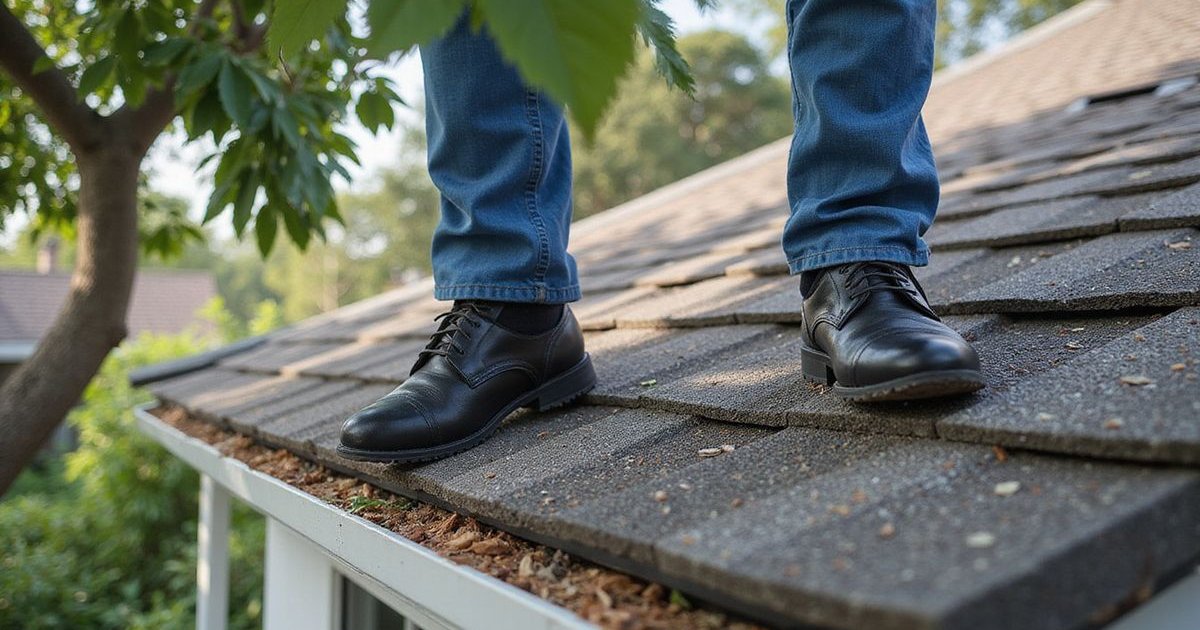
- Non-slip Shoes: Rubber-soled shoes are a must.
- Safety Glasses: These protect your eyes from flying debris and splashing mud during flushing.
Safety First
Working at height is the single biggest risk for homeowners. The Department of Occupational Safety and Health (DOSH) emphasizes proper ladder usage to prevent falls, which are a leading cause of home accidents.
The 4-to-1 Rule
Place your ladder base one foot away from the wall for every four feet of height. This 75-degree angle provides the most stability.
Critical Safety Checks
- Spotter Requirement: Never work alone. Have a family member hold the base of the ladder.
- Terrace House Risks: Be aware of your neighbor’s roof boundary. Walking on the dividing wall or flashing can cause leaks in their property.
- Electrical Hazards: Look up before you climb. In older residential areas like Bangsar or SS2, electrical cables often run perilously close to the roofline.
When NOT to DIY
- Your home is more than two stories high.
- The ground is uneven or soft (common after heavy rain).
- You are uncomfortable with heights.
Step-by-Step Cleaning Guide
Step 1: Secure Your Setup
Place your ladder on firm ground. If you must place it on grass, lay down a piece of plywood first to prevent the feet from sinking.
Step 2: Scoop Toward the Downspout
Wear your gloves and start removing large debris by hand or with a scoop. Start at the “high end” of the gutter and work your way toward the downspout. This prevents you from pushing more debris into the drain opening.
Step 3: The “Tennis Ball” Trick
Before you start flushing water, plug the downspout hole with a tennis ball or a rag.
- Why do this? It prevents loose debris from washing down and creating a clog inside the vertical pipe, which is much harder to clear.
- The Action: Scoop out the final pile of sludge that gathers at the blockage.
Step 4: Flush the System
Remove the plug and spray water down the gutter. Watch the flow. It should exit the downspout with force. If the water backs up, you have a blockage in the pipe itself.
Step 5: Inspect for Damage
While the gutter is clean, look for specific issues:
- Rust: Common on older galvanized iron gutters found in vintage terrace homes.
- Cracks: Frequent in plastic (uPVC) gutters that have become brittle in the sun.
- Sagging: Often caused by loose brackets that cannot hold the weight of water.
Step 6: Reposition Safely
Climb down and move the ladder. Never overreach sideways, as this shifts your center of gravity and causes the ladder to tip.
Problem Solving
Stubborn Blockages
If the downspout is clogged, try tapping the side of the pipe firmly with a screwdriver handle to loosen the debris. If that fails, use a plumber’s snake (drain auger) to break up the blockage from the top.
Leaking Joints
Leaks often occur where two sections of gutter meet.
- For Wet Conditions: Use Selleys Blockade. It is a co-polymer sealant that sticks even if the surface is damp, which is a lifesaver during the rainy season.
- For General Repair: X’traseal Awning & Roofing Caulk is an oil-based sealant widely used by Malaysian contractors for a durable, weather-resistant seal.
Professional Cleaning vs. DIY
Sometimes, it is smarter to pay for expertise. Professional services in the Klang Valley typically charge between RM 150 and RM 400 for a standard terrace house, depending on the length of the gutters and roof accessibility.
| Feature | DIY Cleaning | Professional Service |
|---|---|---|
| Cost | Low (Cost of supplies) | RM 150 - RM 400 |
| Risk | High (Falls, injuries) | Low (Trained & Insured) |
| Thoroughness | Basic cleaning | Includes inspection & minor repairs |
| Equipment | Basic ladder & hose | High-reach ladders, pressure washers |
Consider hiring a pro if you have a steep roof pitch or if your gutters have not been cleaned in over a year. Companies like C19 Cleaning Services can even reach heights of up to 25 meters without scaffolding for commercial properties.
Prevention Tips
Install Gutter Guards
In Malaysia’s climate, the type of guard matters.
- Avoid Foam Guards: The high humidity causes moss to grow rapidly in the foam, creating a new blockage.
- Choose Mesh Guards: Stainless steel or aluminum mesh is superior. It allows heavy heavy rain to pass through while keeping out leaves and large seeds.
Manage Nearby Trees
Trim branches that hang directly over your roof. Common roadside trees like the Angsana shed massive amounts of leaves. Keeping them cut back reduces debris accumulation significantly.
Schedule Your Service
Maintaining your gutters is the single most effective way to prevent water damage to your home.
If DIY isn’t for you, or if you spot a leak that needs professional repair, contact us today. Our gutter services include cleaning, inspection, and repairs to ensure your home is ready for the next storm.