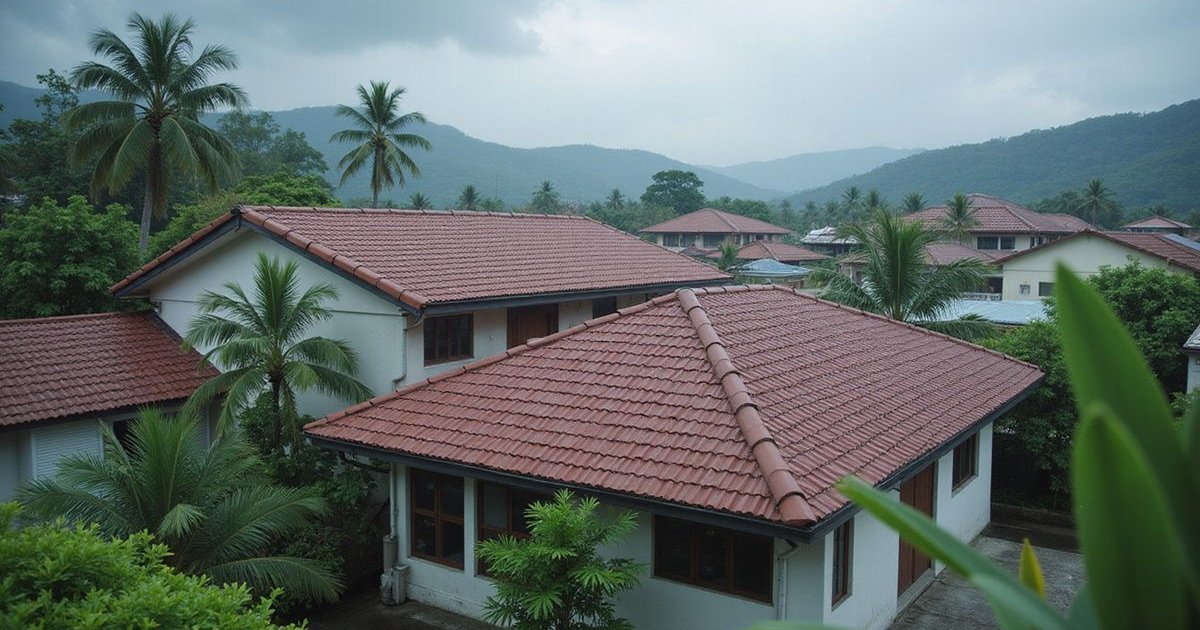
How to Prepare Your Roof for Malaysia
Introduction
We’ve all been there—waking up at 3 AM to the sound of a thunderstorm in the Klang Valley, wondering if that small ceiling stain is about to turn into a waterfall. This anxiety is common because Malaysia’s weather doesn’t just “rain”; it punishes roofs with intense tropical downpours that expose even the smallest structural weakness.
We know that waiting until the first leak appears is often too late.
From our 16 years of experience fixing roofs across Petaling Jaya and KL, we have found that the difference between a dry home and a flooded living room usually comes down to preventative maintenance. The 2025/2026 Northeast Monsoon forecast by MET Malaysia predicted five to seven distinct episodes of heavy rain, which puts immense pressure on aging tiles and drainage systems.
We want to help you get ahead of the weather.
In this guide, we will walk you through the exact inspection points our team uses and the specific repairs that save Malaysian homeowners thousands of Ringgit in water damage.
When to Act
The Northeast Monsoon typically runs from November to March, bringing consistent heavy rains to the East Coast and afternoon thunderstorms to the West Coast.
We strongly advise homeowners to start their roof preparations during the “inter-monsoon” periods of September-October or March-April.
These transition months often bring sudden, violent thunderstorms with strong winds that can dislodge tiles before the steady monsoon rains even begin. If you are reading this in January 2026, you are in the thick of the season, but immediate checks during dry spells are still safer than ignoring a potential issue.
Pre-Monsoon Checklist
Visual Inspection (Ground Level)
You don’t always need a ladder to spot trouble.
We recommend using a pair of binoculars to scan your roof from the garden or street.
- Tiles: Look for “slipped” tiles, especially if you have Monier clay or concrete tiles, which can shift due to strong winds or macaques walking on them.
- Ridges: Check the cement mortar along the roof peak (ridge capping) for visible cracks or separation.
- Debris: Identify piles of leaves or branches trapped in the valleys (the V-shape where two roof sections meet).
- Alignment: Spot any uneven lines in the tile rows that suggest a sagging batten underneath.
Gutter Check
We find that clogged gutters are the number one cause of water backflow in terrace houses.
- Clearance: Remove all leaves, especially if you have broad-leafed trees like Mango or Frangipani nearby.
- Flow Test: Run a garden hose into the downspout to ensure water exits freely at the bottom drain.
- Corrosion: Check metal gutters for rust spots, particularly at the joints, or inspect uPVC gutters for cracks caused by UV brittleness.
Interior Check
We suggest inspecting your ceilings during the day with all lights turned off.
- Stains: Look for faint brown rings or “tea stains” on the plaster ceiling, which indicate a slow, active leak.
- Light Leaks: Go into the attic (manhole) during the day and look for pinholes of sunlight coming through the roof sarking (insulation paper).
- Smell: Note any damp, musty odors in upstairs bedrooms, as this often precedes visible mold growth.
Priority Repairs
Address these common failure points immediately if you find them.
1. Replace or Realign Slipped Tiles
Clay and concrete tiles are durable but rely on interlocking mechanisms that can fail if the supporting wooden battens rot.
We routinely see leaks caused by a single shifted tile that allows water to drip directly onto the ceiling plaster.
If you have spare tiles left over from renovation, keep them accessible; otherwise, identify your tile profile (e.g., Monier Legacy or Elabana) so you can purchase the correct replacement quickly.
2. Upgrade Your Waterproofing
Flat concrete roofs, common on porches and balconies in Malaysia, are notorious for hairline cracks.
We recommend applying a UV-resistant acrylic waterproofing coating like Pentens T-200 or SikaCoat for these exposed areas.
These products are designed to withstand our tropical heat without peeling, unlike cheaper bitumen paints that may degrade after a year of exposure.
3. Clear and Seal Roof Valleys
The metal valley tray is where most water collects, making it highly susceptible to rust.
We suggest cleaning these valleys thoroughly and applying a sealant like Sikaflex strictly to the edges where the metal meets the tiles.
Do not block the water flow path with sealant; only seal the gaps where water might splash upward under the tiles during a storm.
4. Fix Flashing Issues
Flashing is the metal strip that seals the edges where your roof meets a wall or chimney.
We often find that the original sealant dries out and cracks after 5-7 years of Malaysian heat.
Reseal these joints with a high-quality polyurethane (PU) sealant, which offers better flexibility and longevity than standard silicone.
Tree Management
Trees are beautiful, but their branches can act like wrecking balls during a storm.
We advise maintaining a strict clearance zone to prevent physical damage and rodent access.
The “Two-Meter Rule”
Keep all branches trimmed at least two meters (approx. 6 feet) away from your roofline.
- Prevents Damage: Stops heavy branches from scraping tiles during high winds.
- Deters Pests: Makes it harder for rats, squirrels, and musangs (civets) to jump onto your roof and nest in the ceiling.
- Reduces Debris: Minimizes the volume of leaves clogging your gutters.
Council Regulations
Be aware that local councils like DBKL (Kuala Lumpur) and MBPJ (Petaling Jaya) have strict rules about cutting trees outside your compound.
We recommend contacting your local council if a roadside tree is encroaching on your property, as you may need a permit or their assistance to prune it safely.
Emergency Preparedness
Build a “Monsoon Kit”
When a leak starts at 2 AM, you need tools, not a shopping list.
- Heavy-Duty Buckets: Keep three or four buckets specifically for catching leaks.
- Canvas Sheets: Have large waterproof canvas sheets (sold at most hardware stores) ready to cover furniture.
- Emergency Contact: Save the number of a reliable roofer and your insurance agent in your phone favorites.
Know Your Insurance Policy
Many homeowners assume their standard policy covers everything, but that is rarely the case.
We urge you to check if you have a “Houseowner Policy” (covers the building structure) versus a basic “Fire Policy.”
Verify if your policy includes coverage for “storm and tempest” or “flood” damage, as these are often optional add-ons with insurers like Allianz, Etiqa, or Generali.
The Cost of Not Preparing
Ignoring minor roof issues is a financial gamble that rarely pays off.
We have compiled this comparison based on 2025 market rates in the Klang Valley to show the real cost of procrastination.
| Item | Preventative Maintenance Cost | Emergency Repair Cost |
|---|---|---|
| Slipped Tile | RM 150 - RM 300 (Maintenance) | RM 1,500+ (Ceiling repair + painting) |
| Clogged Gutter | RM 0 (DIY) / RM 200 (Labor) | RM 2,000+ (Fascia board rot repair) |
| Minor Crack | RM 50 (Sealant tube) | RM 3,000+ (Structural water damage) |
| Tree Trimming | RM 300 - RM 800 | RM 10,000+ (Roof crush damage) |
Get Your Roof Monsoon-Ready
The rain is inevitable, but the damage is not.
We invite you to contact us today for a comprehensive pre-monsoon inspection if you are unsure about the state of your roof.
Our roof leak repair team is ready to ensure your home remains the safe, dry sanctuary you deserve, no matter how hard it rains.